Erik Jung · 6 October 2026
Tracing Ownership Transitions and Their Effects on Analytics Frameworks in Targeted Online Resources
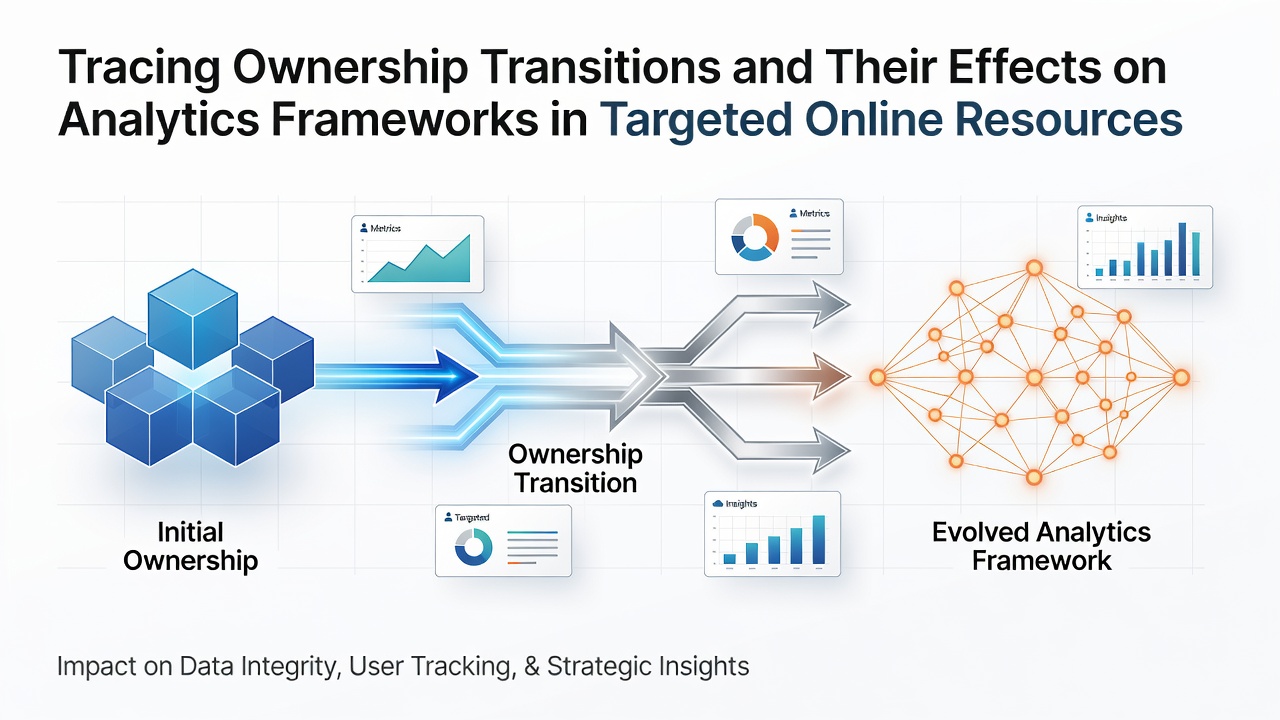
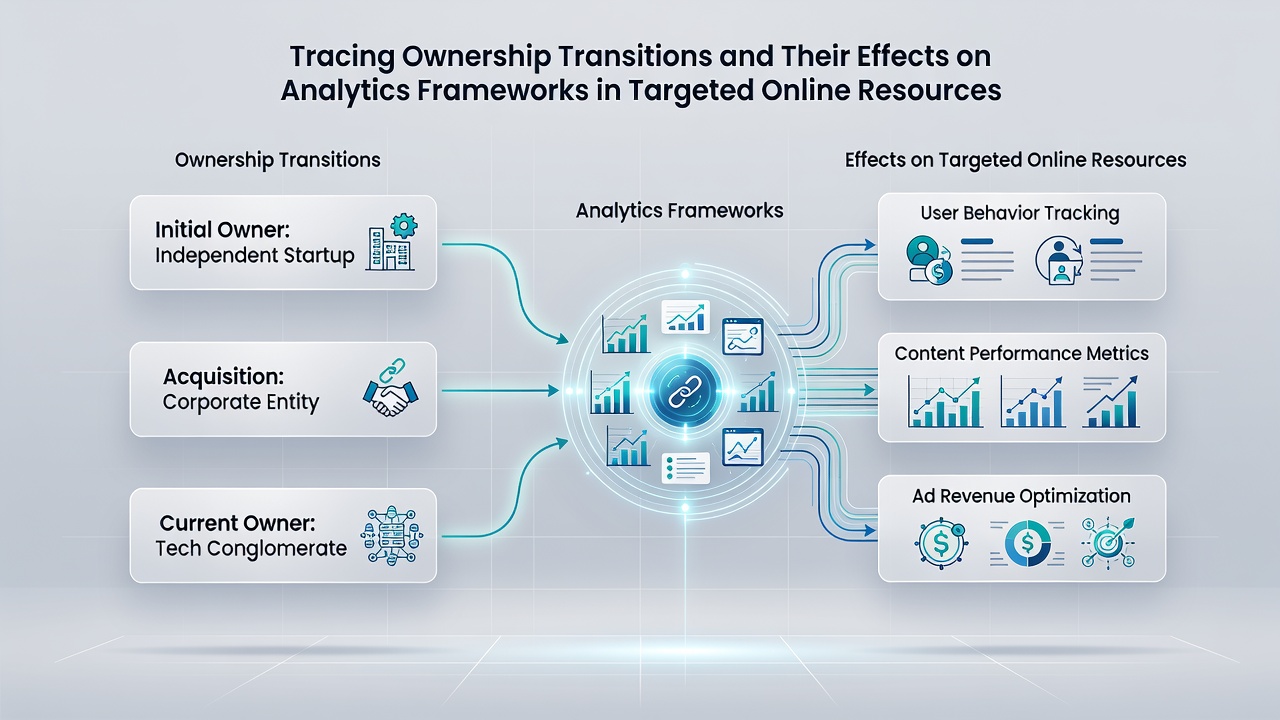
Ownership transitions in targeted online resources often trigger measurable shifts in analytics frameworks, and data from multiple studies shows these changes affect everything from historical tracking continuity to attribution accuracy. When a domain or platform passes to new management, existing setups for tools like Google Analytics or Adobe Analytics frequently require reconfiguration, which can interrupt data streams while new owners adjust permissions and integration points.
Understanding Ownership Shifts in Digital Assets
Business acquisitions and domain transfers have increased steadily since the mid-2020s, with figures from the Australian Competition and Consumer Commission indicating a 14 percent rise in digital property deals during 2025 alone. These movements bring new stakeholders who inherit or rebuild analytics stacks, and researchers have documented cases where legacy tracking codes remain active long after control changes hands, leading to mixed data sets that blend old and new ownership periods.
Targeted online resources, such as niche content sites or specialized service portals, tend to rely on custom event tracking and UTM parameters that tie directly to prior ownership structures. When those structures dissolve, analysts must map out which data points survive the handover and which ones require fresh implementation to maintain consistency across reporting periods.
Direct Impacts on Data Collection and Attribution
Analytics frameworks depend on persistent identifiers like cookies and user IDs, yet ownership changes can reset these elements if new administrators update privacy policies or server configurations. Evidence from academic reviews at institutions in Canada reveals that nearly one-third of transferred domains experience at least a 20 percent drop in tracked sessions during the first month after transition, primarily because authentication keys and measurement IDs no longer align with the original setup.
Attribution models suffer particular strain during these periods, since multi-touch pathways built under previous management lose context when goals and conversion funnels get redefined. Observers note that revenue reports often show artificial spikes or dips until the new framework stabilizes, and cross-device tracking becomes unreliable if pixel placements shift without proper documentation.
Case Examples from Recent Transfers
One documented transfer involving a regional news aggregator in late 2025 demonstrated how access to historical Google Analytics 4 properties transferred only after legal review, forcing the incoming team to reconstruct baseline metrics from server logs. Another instance in the education sector showed that API connections to third-party data warehouses broke during registrar migration, which delayed real-time dashboards for several weeks while engineers rebuilt endpoints.
Those who've examined these transitions point out that October 2026 brought updated guidelines from the European Commission on data portability during digital asset sales, which encouraged clearer handover protocols for measurement configurations. Companies that followed these recommendations reported faster recovery times for their reporting accuracy compared with earlier deals that lacked such planning.
Technical Adjustments Required Post-Transition
New owners typically audit existing measurement protocols first, checking for deprecated scripts and verifying that consent management platforms align with current regulatory expectations. This process often uncovers duplicate tracking tags left from prior campaigns, and cleaning them reduces noise in subsequent data sets without losing continuity on core metrics like page views or bounce rates.
Server-side tagging gains importance in these scenarios because it allows greater control over data routing independent of client-side changes that might occur during ownership handovers. Industry reports from research groups in the United States highlight that organizations adopting server-side approaches after transfers maintained more stable user flow data than those relying solely on browser-based implementations.
Longer-Term Effects on Reporting Integrity
Over multiple quarters, analytics frameworks under new ownership frequently evolve to prioritize different key performance indicators, which can complicate year-over-year comparisons unless careful segmentation isolates pre- and post-transition periods. Data indicates that segmented views help preserve trend visibility, yet many teams still face challenges when trying to reconcile legacy goals with updated business objectives.
External benchmarks from trade organizations show that sites undergoing ownership transitions recover full analytics reliability within 90 days on average when dedicated migration teams handle the reconfiguration, whereas ad-hoc approaches extend that timeline significantly.
Conclusion
Ownership transitions reshape analytics frameworks in targeted online resources through changes in data access, tracking continuity, and attribution logic, and evidence continues to accumulate on how structured handover processes mitigate these disruptions. As digital asset transfers persist into late 2026, the patterns observed so far suggest that proactive mapping of existing measurement setups remains central to preserving reporting value across ownership boundaries.